Foodservice, Retail or Food Industry: How Each Buyer Works With Epic
Horeca kitchens, foodservice distributors, retailers and food processors all buy from the same range of more than 350 products in Kontich. They just don't buy it the same way.
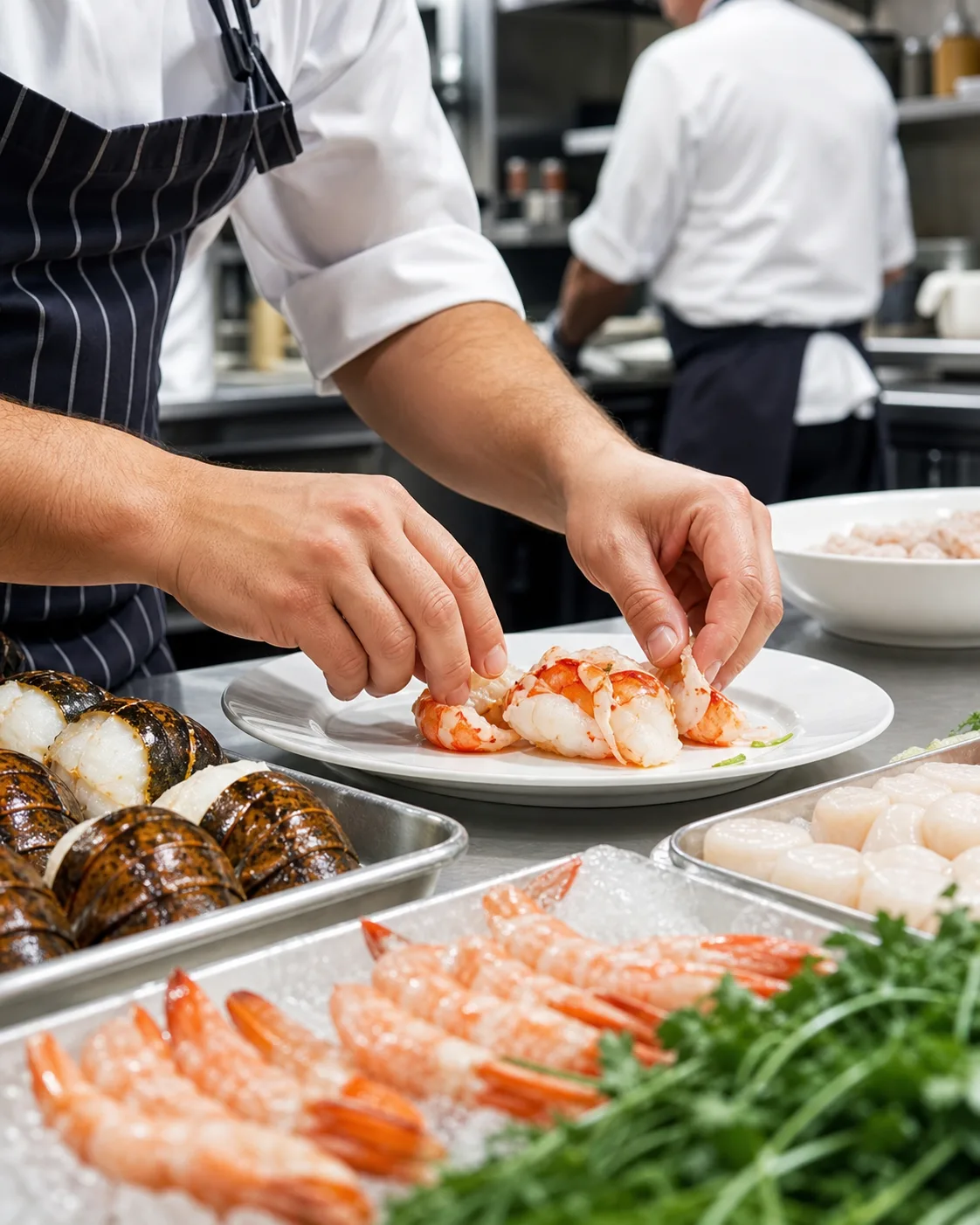
Foodservice, Retail or Food Industry: How Each Buyer Works With Epic
Horeca kitchens, foodservice distributors, retailers and food processors all buy from the same range of more than 350 products in Kontich. They just don't buy it the same way.
Is ordering from Epic different for a restaurant, a distributor or a food processor?
The range and the warehouse don't change: more than 350 frozen seafood products, all shipped from Epic's distribution centre in Kontich, Belgium. What changes is what each buyer checks first. A horeca kitchen picks on preparation method and portion size; a distributor or retailer on range breadth, carton format and certification labels; a processor on bulk, on-demand volume.
Epic doesn't sell to consumers. It supplies horeca businesses, foodservice distributors, retailers and the food industry in Belgium and the rest of Europe, and its Who we serve page groups them into three channels: food service, retail and food industry. The sections below follow that split.
What does a restaurant or caterer look for in the range?
Mostly the plate. A kitchen wants a portion it can cost and repeat, which is why fish fillets at Epic are sold by weight per piece rather than by count: cod loins come at 150 to 200 g per piece, a size that works as a fixed main course. Shrimp is sold the other way round, by count per pound, where a lower number such as 6/8 means bigger pieces.
Pack format matters just as much when freezer space is tight. Individually wrapped pieces (IWP) let a kitchen thaw only what the evening needs and leave the rest of the carton frozen. Epic's own food service copy describes a range that runs "from ready-made to unprocessed ingredients, easy to work with and easy to prepare with your own touch", and the vegetarian side now includes wakame salad, edamame soy beans, churros lazo, breaded onion rings and spring rolls.
Count sizes and pack formats are explained step by step in the buyer FAQ.
What changes for a foodservice distributor or retailer?
Distributors and retailers buy for someone else's kitchen or shelf, so the questions move from the plate to the carton. Can one supplier cover shrimp, fish, cephalopods, shellfish and crustaceans, frog legs, surimi and finger foods? What's the pack size per unit, anywhere from 100 g to 2 kg, and how many units go in a carton, usually 4 to 12? And which references carry a label they can print on their own packaging?
That last question needs care. IFS Logistics, IFS Broker and AEO cover Epic as a whole. MSC and ASC don't; they sit on specific references, such as certain cod loins under MSC and certain vannamei shrimp and tilapia fillets under ASC. A retailer who wants an MSC or ASC logo on pack should check it per reference, and the certificates page shows how each one applies.
Behind the label, Epic's retail copy points to a network of long-term partners, often for decades, with the company "staying closely connected at every step to guarantee origin, strict quality control, consistent standards and full food safety from harvest or catch to your shelves."
How does Epic supply food processing companies?
Processors don't buy a dish; they buy an input. Epic delivers frozen seafood to them "in bulk and on-demand, ready to be transformed into fresh or frozen convenience foods such as pizzas, lasagnes, fish dishes, stews, ready meals and soups", sold on under the processor's own brand rather than Epic's. Block frozen cartons suit that work better than IWP: the 1.44 kg Black Tiger shrimp blocks, packed six to a carton, are a typical example of the format used for larger volumes and further processing.
What a production planner needs most is continuity. The 4,500 pallet positions in Kontich keep the full assortment available year-round, independent of any single catch or harvest season, so deliveries can follow a production schedule instead of a seasonal window. Epic's food industry copy commits to "always deliver in line with your production requirements". Private label and OEM buyers will find the whole picture on the importer and distributor page.
How does a new buyer open an account?
The same way in every channel. Send Epic the product, the volume and the delivery destination through the contact page and ask for a quote and a webshop login. Once the login is active, prices and availability show directly on shop.epic.be. Minimum order quantity varies per reference and per order, and neither it, the glazing percentage nor the technical spec sheets are published on the webshop, so ask for them with the first quote.
Delivery runs from Kontich to Belgium and the rest of Europe. For an overview of the full range by category, see the frozen fish and seafood wholesaler page.
Frequently asked questions
Does Epic sell frozen seafood to consumers?
No. Epic supplies horeca businesses, foodservice distributors, retailers and the food industry. Consumers aren't a sales channel.
Can a restaurant order the same products as a wholesaler?
Yes. The references in the range are available to foodservice distributors, wholesalers and horeca businesses alike; what differs is the format and volume each one orders.
Where does Epic's frozen seafood come from?
From a worldwide network of fishermen and farmers. Epic is an importer and distributor, not a producer, and how Epic sources frozen seafood explains how that network works.